

After an accident, the biggest question on most people’s minds is a financial one: do insurance premiums rise after a personal injury claim?
The short answer is yes, they probably will—especially if you were found at fault for the accident. Insurance companies are in the business of managing risk. When you file a claim, they see you as a higher risk to insure in the future, and they adjust your rates accordingly.
Understanding the Initial Impact of a Personal Injury Claim

When you file a personal injury claim, your insurance provider doesn’t see it as just a one-off event. To them, it’s a new piece of data that updates your risk profile. Think of your premium like a subscription fee for financial protection. Before the accident, your “fee” was based on a good driving record. Afterward, the provider has to adjust that fee to account for the new, proven risk.
This increase is technically called a surcharge. It’s not a permanent hike, but it’s a temporary penalty added to your premium that can definitely feel like one.
A single at-fault personal injury claim can trigger a surcharge that lasts for three to five years. Over that time, the total cost of this increase can easily add up to more than the original claim amount, making it a serious long-term financial headache.
This system is how insurers balance their own financial exposure. While it might not feel fair when you’re the one paying more, it’s a standard practice across the industry. The key takeaway is that the claim itself, particularly if you’re found responsible, recalibrates how the insurance company views you as a policyholder.
Key Factors at Play Immediately After a Claim
As soon as a claim is filed, several key elements start to influence just how much your rate might go up. Knowing what they are can give you a better idea of what to expect.
Here’s a quick look at the main factors that insurance companies consider right away.
Primary Factors Affecting Your Premium Increase
| Factor | Impact on Premium | Brief Explanation |
|---|---|---|
| Fault | High | Being the at-fault driver is the single biggest predictor of a rate increase. |
| Claim Severity | Medium to High | A large payout for serious injuries will trigger a bigger increase than a small claim. |
| Driving History | Medium | A clean record can soften the blow, while prior tickets or accidents will make it worse. |
| Claim Frequency | High | Multiple claims in a short period signal a high-risk driver, leading to steeper hikes. |
Let’s dig a bit deeper into what these mean for you.
- Determining Fault: This is the most critical piece of the puzzle. If you’re the at-fault driver, a rate increase is almost guaranteed. Even though Hawaii is a “no-fault” state for initial medical bills (paid by your own PIP coverage), fault is still assigned and plays a massive role in how insurers calculate your premium after a serious accident. You can learn more about how Hawaii’s no-fault law works in our dedicated guide.
- Severity of the Claim: It’s all about the numbers. A claim involving minor injuries and a few doctor’s visits will have a much smaller impact than one involving major medical treatment, long-term care, or significant lost wages.
- Your Driving History: A long track record of safe driving can act as a buffer. Some insurers even offer “accident forgiveness” for a first claim if your history is spotless. On the flip side, any previous tickets or claims will only amplify the increase.
Why Bodily Injury Claims Cause the Biggest Rate Hikes
Not all insurance claims are created equal, especially in your provider’s eyes. A minor property damage claim is one thing; a claim involving a trip to the emergency room is a whole different ballgame. This is exactly why personal injury claims, particularly those with bodily harm, trigger the most significant and lasting premium increases.
Think of it this way: a cracked bumper is a predictable, fixed cost for your insurer. A bodily injury claim, on the other hand, is a major unknown. It’s not just a single bill but a cascade of potential costs with a much, much higher ceiling.
The Financial Ripple Effect of an Injury
When an insurer sees a bodily injury claim, they see a high-stakes financial event full of expensive and open-ended variables. These are the components that can make the total payout skyrocket—and, in turn, make you look like a much bigger risk to insure.
The key cost drivers that worry them include:
- Escalating Medical Expenses: This isn’t just the initial ER visit. It can include surgeries, ongoing physical therapy, specialist appointments, and even future medical care that might be needed for years.
- Lost Wages and Earning Capacity: If the injured person can’t work, the insurer may be on the hook to cover their lost income. This can add up fast, especially if the recovery is long.
- Pain and Suffering Compensation: This is a non-economic damage, meaning it’s subjective. But for serious injuries, it can lead to substantial payouts that are hard to predict.
Because these costs are so high and uncertain, the insurer has to adjust your premium to offset the new level of financial risk you represent.
Quantifying the Premium Increase
When a personal injury claim involves bodily injury, the premium hikes are far steeper than for a simple fender-bender. A typical at-fault accident involving an injury can jack up your rates by 30% to 45% per year. In more serious cases, those increases can hit 50% or more. This surcharge usually stays on your record for three to five years.
Your insurance premium is a reflection of calculated risk. A dented door is a small, contained risk. An injury, with its potential for long-term medical care and legal action, is a massive, uncontained risk that demands a much higher premium.
The severity of the injury is directly tied to the size of the rate hike. Claims involving more significant harm—what the law often calls a serious bodily injury—have the biggest financial consequences. Simply put, the greater the physical harm, the larger the financial exposure for the insurer, and the bigger the hit to your future insurance costs.
Calculating the Real Cost of a Premium Increase
Understanding why your insurance rates might go up is one thing, but seeing the actual numbers is what really hits home. Let’s move past the theory and do some practical math to see how a single personal injury claim can affect your family’s budget for years to come.
It’s a mistake to think of a rate hike as a one-time penalty. It’s more like a recurring surcharge that typically stays on your policy for three to five years. That means the total financial hit is much bigger than what you see on your first new bill.
Translating Percentages into Dollars
Across the country, at-fault accidents are a guaranteed way to see your car insurance premiums climb, with typical increases falling somewhere between 20% and 50%, depending on how serious the accident was. Digging into the data, a single at-fault claim can easily trigger a premium hike of 30% to 45% a year. Over the full surcharge period, that can end up costing you more than the original repair bill.
So, let’s put this into a real-world scenario for a family here in Hawaii.
Imagine your annual premium is currently $1,800. After an at-fault accident that includes a personal injury claim, your insurer slaps on a 45% surcharge.
- Annual Increase: $1,800 x 0.45 = $810 per year
- New Annual Premium: $1,800 + $810 = $2,610
That breaks down to an extra $67.50 hitting your bank account every single month. While that might not sound catastrophic on its own, the long-term cost is where the real story is.
The Long-Term Financial Drain
That surcharge isn’t a one-and-done deal. It’s a slow financial bleed that continues for years. If that 45% increase sticks around for just three years, the total extra cost adds up fast.
Total Surcharge Cost: $810 (Annual Increase) x 3 (Years) = $2,430
All of a sudden, one incident has cost you nearly $2,500 in extra premiums alone. And remember, that number doesn’t even include your deductible or any other out-of-pocket costs from the accident itself. This is exactly why it’s so critical to understand how personal injury settlements are calculated—to make sure you’re compensated for all your losses, including these future costs.
The infographic below shows why insurers react so strongly to personal injury cases compared to claims that only involve property damage.
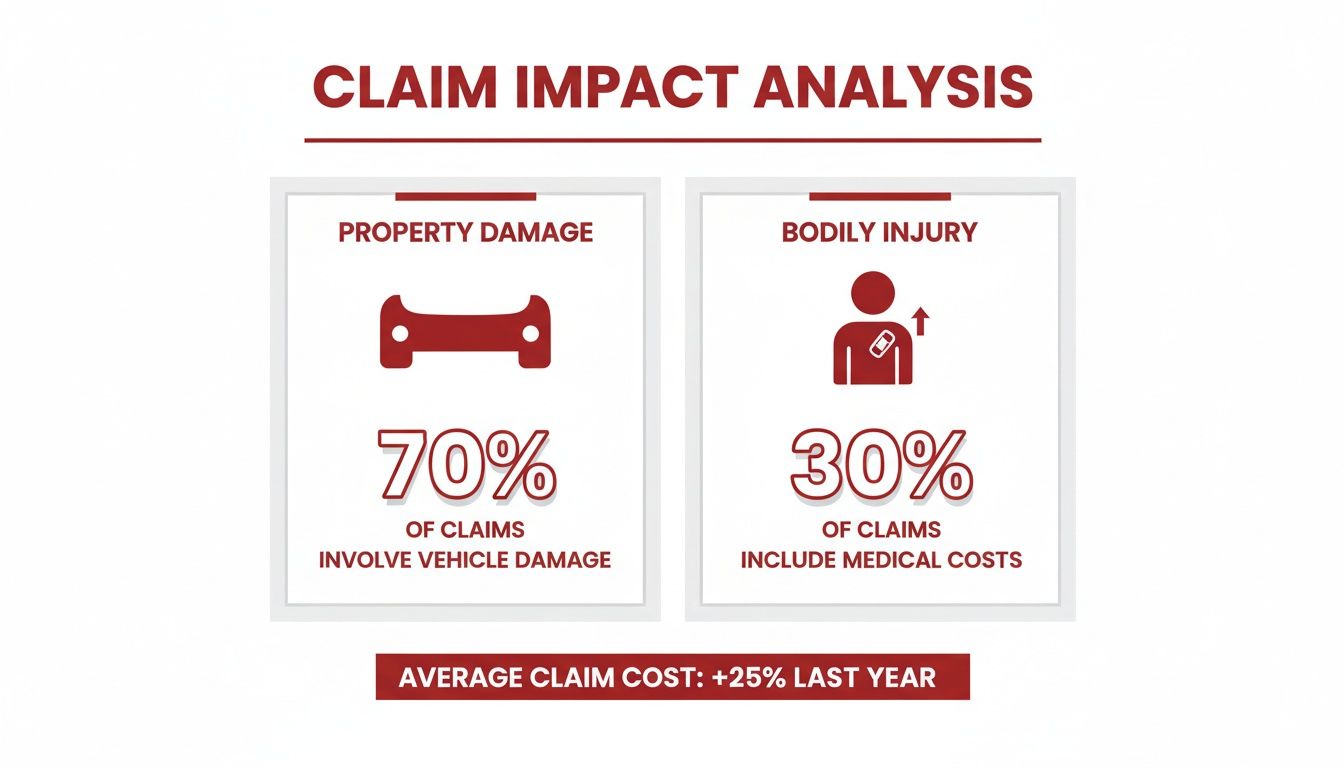
As you can see, it’s the potential for sky-high medical bills that really drives these big, long-lasting premium increases.
What Actually Determines How Much Your Rate Goes Up?
When your insurance company re-evaluates your premium after a personal injury claim, they aren’t just pulling a number out of thin air. The increase isn’t a generic penalty; it’s a calculated adjustment based on how risky they now think you are. Think of it like your credit score—a few key factors are analyzed to decide the final number.
The single biggest factor is fault determination. If you’re found to be the one who caused the accident that led to an injury, a rate increase is almost guaranteed. Insurers see this as a huge red flag for future risk, making it the primary trigger for a premium hike. On the flip side, if you weren’t at fault, your rates are far less likely to climb.
The Role of Claim Size and Your Driving Record
Beyond who caused the crash, the dollar amount of the claim plays a massive role. A large payout for serious injuries and long-term medical care tells the insurer this was a high-cost event. To recoup their losses and hedge against future risk, they’ll hit you with a more substantial premium increase. A minor claim with a small payout will usually lead to a much smaller, more manageable adjustment.
Your driving history is the other piece of the puzzle, acting as either a safety net or an accelerant.
- A Clean Record: If you have a long history of safe driving with no claims or tickets, your insurer might go easier on you with a smaller surcharge. Some companies even offer “accident forgiveness” programs that could wipe out a rate increase entirely for your first at-fault incident.
- A Poor Record: On the other hand, if you already have tickets or accidents on your record, this new claim will make things much worse. A personal injury claim on top of a spotty history screams “high-risk driver,” and your insurer will respond with a much steeper financial penalty.
How Hawaii’s No-Fault System Fits In
It’s easy to get confused about how Hawaii’s “No-Fault” insurance system factors into all of this. While your own Personal Injury Protection (PIP) coverage handles your initial medical bills no matter who was at fault, that doesn’t mean fault just disappears from the equation.
In serious accidents, fault is absolutely still determined. If your actions caused major injuries that go beyond the no-fault limits, the other person can and will file a lawsuit against you. That legal action, and the resulting claim against your liability coverage, is what triggers a premium review based on you being the at-fault driver.
Finally, the insurance company you’re with matters. Some carriers are known for being more lenient after a claim, while others have very strict underwriting rules that lead to bigger rate hikes. Each insurer weighs these factors differently, which is why the fallout from a personal injury claim can look so different from one person to the next.
Actionable Steps to Minimize the Financial Impact
While a rate hike might feel inevitable after an at-fault accident, the size of that increase isn’t set in stone. You can take control. With the right strategy, you can actively work to soften the long-term financial blow and manage the coming surcharge.
Some people try to sidestep a claim altogether by paying for minor damages out-of-pocket. This is a risky move, especially when someone is hurt. What feels like a little soreness today can easily become a serious medical problem tomorrow, leaving you on the hook for huge bills with no insurance to back you up.

Proactive Measures to Soften the Blow
Instead of dodging a necessary claim, a much smarter approach is to focus on proactive steps that can help offset a rate increase. Most insurers offer discounts that can chip away at the new, higher premium, making it far more manageable.
One of the most effective things you can do is enroll in a defensive driving course. Once you complete an approved program, you can earn a discount of 5% to 15% on your premium. That one action can neutralize a good chunk of an accident-related increase and sends a clear message to your insurer that you’re serious about safe driving.
You can also look at the bigger picture. Beyond tactics tied directly to the accident, it’s worth exploring 10 proven ways to lower car insurance premiums to find other savings. When you combine these broader strategies with smart post-accident actions, you build a much stronger defense against high rates.
Taking proactive steps like completing a defensive driving course or bundling policies won’t erase a surcharge, but they can make the financial impact much less severe. Think of it as creating your own discount to fight back against the increase.
How an Attorney Influences the Outcome
Bringing in a personal injury attorney does a lot more than just secure compensation for your injuries—it can actually change the long-term financial fallout from the claim. An experienced lawyer brings a strategic eye to the entire process, and that can have a positive ripple effect on your future premiums.
Here’s how having legal representation can make a real difference:
- Strategic Claim Management: Your attorney handles all the back-and-forth with the insurance company. They make sure the claim is presented accurately and professionally, which helps avoid the kind of misunderstandings that can make you look like a bigger risk.
- Negotiating Settlements: A good lawyer doesn’t just negotiate the dollar amount. They can also influence how the claim is categorized and processed by the insurer, which is crucial for minimizing the negative marks that lead to surcharges.
- Protecting Your Rights: At the end of the day, insurers are businesses looking out for their bottom line. An attorney is there to protect your rights, preventing you from being unfairly penalized and ensuring the final resolution is as favorable as possible.
Ultimately, navigating the aftermath of an injury claim is about more than just the check you get. By taking these practical steps, you can help protect your financial stability for years to come.
When You Should Contact a Personal Injury Attorney
Figuring out when to call a lawyer after an accident can feel overwhelming. You’re dealing with injuries, car repairs, and maybe even missing work. While you can handle a minor fender-bender on your own, certain situations are immediate red flags that you need professional legal help.
An attorney isn’t just there to get you a check; they’re your advocate, protecting you from the long-term financial fallout an accident can cause.
The Clear Signs It’s Time to Call a Lawyer
The most obvious reason to get a lawyer is if you’ve suffered a significant injury. If your medical bills are starting to stack up, you need ongoing physical therapy, or the costs are blowing past what your insurance covers, you need an expert in your corner. They know how to accurately calculate the true cost of your injury so you aren’t left paying for it years down the road.
Another major trigger is any argument over who was at fault. Insurance companies are businesses, and their goal is to pay out as little as possible. That often means trying to pin the blame on you. If the other driver or their insurer is denying responsibility, a lawyer is your best defense.
You also need to be very careful with quick settlement offers. Adjusters often pressure people to accept a lowball offer before the full extent of their injuries—and the financial damage—is even clear.
An attorney acts as a crucial buffer between you and the insurance company. They handle all the confusing phone calls, manage the mountain of paperwork, and negotiate for you. This keeps you from making costly mistakes while you’re under stress and focused on recovery.
Here are a few specific scenarios where calling a firm like Olson & Sons is the right move:
- Serious Injuries: Any injury that puts you in the hospital, requires surgery, or needs long-term physical therapy.
- Disputed Fault: The other driver is blaming you, or there are conflicting stories about how the accident happened.
- Unfair Settlement Offers: The first offer from the insurance company seems way too low to cover your medical bills, lost paychecks, and other costs.
- Complex Insurance Issues: You’re dealing with a driver who has no insurance (uninsured) or not enough (underinsured). It’s also crucial if your own insurance company unfairly denies your claim. You can learn more about legal options for denied insurance claims in our other guide.
Bringing in an attorney ensures your claim is handled strategically from the start. This not only helps you get fair compensation but can also play a role in managing the financial aftermath, including how the claim might affect your future insurance rates.
Answering Your Top Questions About Claims and Premiums
Even after breaking down the basics, you probably still have a few specific questions running through your mind. It’s completely normal. Let’s tackle some of the most common concerns we hear from clients every day.
Will My Rates Go Up If The Accident Wasn’t My Fault?
This is the big one, and the short answer is: probably not. If you are clearly not at fault for the accident, your insurance company should recover its costs from the other driver’s insurer. In a perfect world, that’s the end of it.
But we don’t live in a perfect world. Some insurance carriers will still see any claim as a sign of increased risk. Even when you’re not at fault, it’s not unheard of for insurers to raise rates by 5% to 15%. Their logic? Just being involved in an accident makes you statistically more likely to be in another one down the road. It feels unfair, and it often is. The best move is to have a direct conversation with your agent to understand their specific policy.
What Exactly Is “Accident Forgiveness”?
You’ve probably seen the commercials. Accident forgiveness is an optional feature you can add to your policy that, in theory, gives you a “free pass” on your first at-fault accident, preventing a rate hike.
It sounds great, but it’s not automatic. You usually have to pay extra for this coverage before an accident happens, and many companies require you to have a long, spotless driving record with them to even qualify. Think of it as a loyalty reward you pay for—it can be a lifesaver, but you have to opt in ahead of time.
Should I Just Switch Insurance Companies After a Claim?
Shopping around for a better rate is almost always a smart financial move. However, don’t expect to completely escape the impact of a recent claim.
That accident is now part of your official claims history, which every insurance company can access when they run your quote. While one company might offer a better deal than another, your new premium will still factor in the recent incident. The best time to comparison shop is usually after your current policy renews, so you can see exactly how much your rate increased and use that number as a baseline.
Navigating the aftermath of an accident in Kona or Kamuela can feel overwhelming. If you’re worried about your personal injury claim, rising insurance costs, or just don’t know where to turn next, the team at Olson & Sons is here. We provide straight answers and aggressive advocacy to protect your rights and your finances.
Contact us 24/7 for a no-obligation consultation at https://hawaiinuilawyer.com.